The Spanish metropolis offers a wealth of new experiences – from hotels and restaurants to bars and an exciting art scene.
Contributed by Jens Hoffmann
The Gaudí architecture, the high-rise hotels with rooftop views of the Mediterranean… there are many good reasons for a city break to Barcelona.
Catalan Art Nouveau characterizes the cityscape of this Spanish metropolis on the coast.
More than 1.7 million residents also enjoy the Sagrada Familia, its architecture, Mediterranean beaches, and culinary delights.
The Sagrada Familia is Antoni Gaudí’s masterpiece.
He received the commission in 1882, when the Neo-Gothic style was dominant.
He drew inspiration from forms found in nature.
One example is the central portal on the so-called Nativity Façade, crowned by a cypress tree.
Eighteen towers were planned, but only the Bell Tower of Saint Barnabas was completed during Gaudí’s lifetime (1852–1926).
Two elevators take us to a height of 65 meters.
The 138-meter-high Tower of the Virgin Mary is crowned with a twelve-pointed, illuminated star.
The Tower of Jesus Christ, at 172.50 meters, is the tallest church tower in the world.
Inside the basilica, stone columns support the vaults, which branch out like trees, culminating in a canopy of leaves.
The stained-glass windows were designed by the painter and glass artist Joan Vila-Grau.
For the bucketlist: Torre Glòries
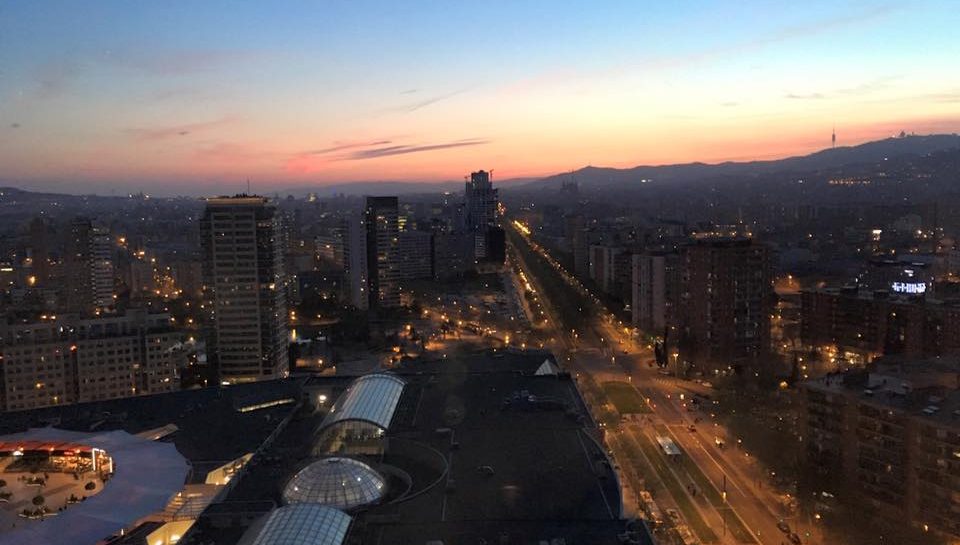
Cityscape of Barcelona with the famous Torre Agbar
The metropolis continues to develop into an art city.
The Torre by Jean Nouvel is affectionately nicknamed “Dildo” by locals.
Its aluminum and glass facade, with its irregular color gradient, resembles a water fountain during the day.
At night, it appears colorfully illuminated.
Some of the elevators are constructed of glass, making the ride to the observation deck on the 30th floor, at a height of 125 meters, particularly captivating.
Here, visitors can walk through the Cloud Cities Barcelona art installation by Tomás Saraceno, which floats in the dome above their heads.
During the planning phase, Nouvel was careful to keep the tower below the height of the Sagrada Família.
In 2006, Nouvel received the International High-Rise Award for the Torre.
Bucketlist: Casa Milà
The chimneys on the roof terrace of Casa Milà, designed by Antoni Gaudí in Barcelona.
Another fantastic work by Gaudí stands on the grand boulevard Passeig de Gràcia.
The Milà family commissioned the architect to design the six-story building, in which they themselves occupied an apartment.
It was nicknamed La Pedrea, the quarry, because its facade is highly irregular and features numerous projections.
The balcony railings are abstract sculptures reminiscent of seaweed.
On five floors, visitors can explore an original furnished and decorated apartment, as well as an exhibition on Gaudí’s complete works on the top floor.
Its 270 arches create the impression of being inside the skeleton of a giant whale.
Above the roof terrace, ventilation shafts, stairwells, and chimneys rise like petrified warriors.
Palau de la Música Catalana
The Barcelona Opera House from the outside
As playful as the concert hall, built between 1905 and 1908 by Lluís Domènech Montaner, may appear, it was constructed in a decidedly modern style.
Windows were inserted into a steel frame, allowing natural light to flood the interior of the “music box.”
This feature makes the Modernisme-style building a UNESCO World Heritage Site.
Attending a concert is a must.
The grand hall and the stage, above which the organ pipes tower, form a harmonious whole.
The magnificent instrument, designed by the German Eberhard Friedrich Walcker, has 63 stops across four manuals.
Richard Strauss, Igor Stravinsky, Sergei Rachmaninoff, and Montserrat Caballé, among others, have performed at the Palau.
With Gaudí’s architecture and Miró’s artworks as backdrops, Woody Allen filmed his romantic comedy “Vicky Cristina Barcelona” here.
Penélope Cruz won the Academy Award for Best Supporting Actress for her performance.
Museum of Contemporary Art Spain in Barcelona (MACBA)
The MACBA opened in 1995 at the initiative of art critic Alexandre Cirici Pellicer.
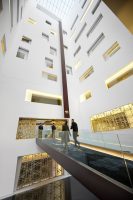
Its gleaming white building stands in stark contrast to the architecture of the old El Raval district.
The MACBA’s collection encompasses works from the past 100 years, beginning with avant-garde artists of the 1920s.
A particular focus is the year 1968, when happenings, conceptual art, and participatory art revolutionized the international art scene.
Artists such as Andy Warhol, Pablo Picasso, and Gerhard Richter are represented.
New exhibitions are curated every three to four months from the collection of over 6,000 sculptures, paintings, and photographs.
La Boqueria
The large Sant Josep de la Boqueria market in Barcelona
Barcelona certainly doesn’t lack markets. But Market Bouqueria wants to be the best in the world.
Barca, me gusta.