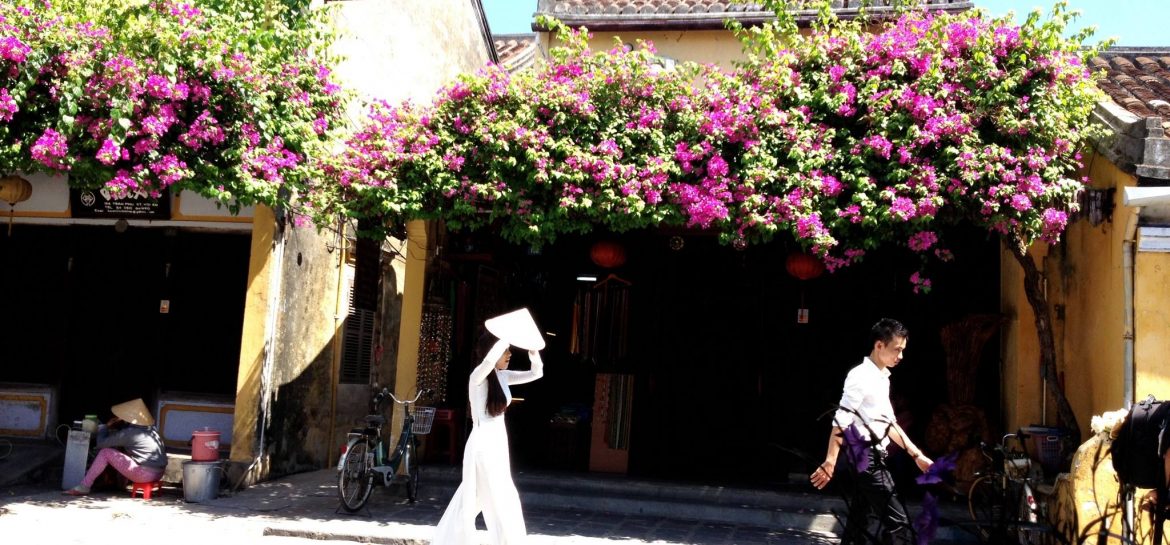
I was a few years before here when we featured the beauty of Halong Bay.
Nowadays lots of cruise boats, bringing tourists to marvel at these rocky icons, eroded by the wind and waves, and topped with greenery.
I’d flown into Hanoi and, as the plane descended through the early-morning, I thought of the American bombers flying sortie after sortie over North Vietnam.
On my first visit, it was more a French colonial city; it still retains much of that charm, although of course modernity has changed the city.
The city is charming, scooters are everywhere.
Our main purpose is to experience the 1,600km journey by train from Hanoi to Saigon.
The single track line that runs the length of the country was built when this part of the world was known as French Indochina, but after it split into North and South Vietnam, continuous service ceased in 1954.
Heavy bombing during the Vietnam War put much of the track out of action but, after the fall of Saigon, the line was restored.
Trains started running again in the late Seventies and unofficially services have been known ever since as the Reunification Express.

The overnight sleeper is joyful. Second class is crammed with families, getting ready to bed down for the night, to have a first class couchette is even more fun. I enjoy a decent night’s sleep before arriving in Hue — almost half way down the country – for breakfast.
This city was the imperial capital of Vietnam, from 1802 until 1945 and there are still tantalising glimpses of the grandeur of this time.
It boasts an immense Imperial Citadel on the north bank of the Perfume River, surrounded by miles of walls, pierced by 10 gateways and punctuated by myriad temples.
This journey between Hue and Da Nang further south is one of the most exhilarating stretches of the line.
It climbs to the Pass of the Ocean Clouds through a series of tunnels and reaches the geological divide between the former North and South Vietnam.
Beaches lie below, with hazy islands in front and misty mountains on the horizon.
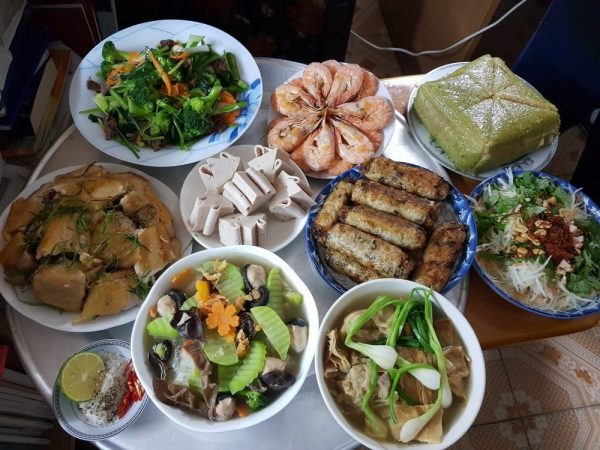
Da Nang is one of Vietnam’s largest cities, but we pass without stopping as inside the carriage cheery railway staff dispense mountains of rice and grilled meats from trolleys.
I take in the landscape — miles and miles of rice paddies, farmers in straw conical hats.
Nha Trang is a booming tourist city with lots of hotels lining the beach.
The Vietnamese are earnest holiday makers and dawn sees the shallows packed with paddlers and day-trippers here to enjoy excursions, snorkelling and mud baths.
On a low hill just outside town is another famous temple it was built by the Cham people who once ruled this region.
Originally there were several towers, but only four remain with the highest rising to 50m.
It is topped with a terraced pyramidal roof and inside the vaulted main chamber there’s a huge black stone statue of the 10-armed deity Uma.
The Hindu temple has been adopted by Buddhists and I’m surrounded by devout worshippers.
The last leg of the journey sees me back on the rails and it’s getting dark by the time we reach Saigon.
Just outside the station looking up, I see a skyline that belong to a booming Asian city.
Further into town, I’m pleased to see the Central Post Office and the pink-brick Notre Dame Cathedral have survived.
If you’re interested in the recent past then the War Remnants museum has three floors to tell the grim story of the conflict.
The former Presidential Palace has been left as it was when the North Vietnamese tanks smashed through the gates and those same tanks still stand guard.
A trip out of town takes me to the Cu Chi underground tunnels where Viet Cong soldiers hid before launching their final offensive on the city.
A section of tunnel has been widened so that Westerners can fit in, but it’s still a claustrophobic experience.
Back in town in the rooftop bar of the Majestic Hotel, I watch the sun go down.
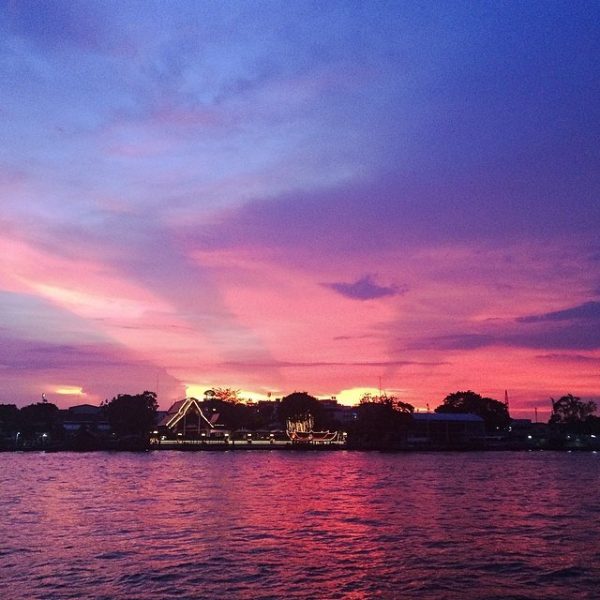
The people smile and make us happy and we are feeling like in Bangkok.