Happy Brasov – In Transylvania, the Carpathian Mountains, a remarkable food culture and a new generation of tourism ambitions are giving travelers reasons to look beyond the familiar legends.
Contributed by feature reporter Jens Hoffmann
I went to Romania with a list of places to see. Brașov, Dracula’s castle, the Carpathian Mountains.
And, naturally, the food.
I returned with something rather less easy to put on an itinerary: the feeling that I had discovered a country I wanted to know better.
Romania is a country of striking regional contrasts, where landscapes change over long journeys and history seems to reveal itself differently from one town to the next.
During my visit, I found a destination that was at once deeply rooted in its traditions and actively considering what it might become. There were ambitious conversations about airports, tourism development and international cooperation. There were medieval streets, mountain air and meals prepared with ingredients that seemed to have traveled hardly farther than the kitchen door.
The food, I should say at the outset, was extraordinary.Much of it was prepared with fresh, locally sourced ingredients, many grown by the people who served them. In the Carpathians, a meal can be an expression of geography as much as of appetite. The land, the seasons and the traditions of a region are present at the table, often without much need for explanation.
But food was only one part of the story.
Happy Brasov 2026
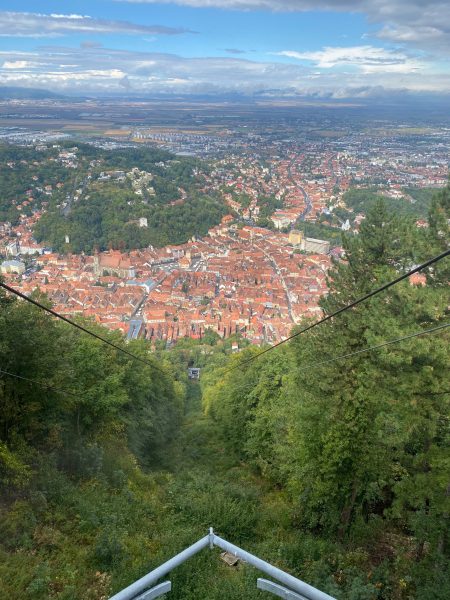
My first destination was Brașov, a Transylvanian city set against the Carpathian Mountains. Its historic center, with its architectural layers and intimate streets, is beautiful enough to reward an unhurried visit.
Yet Brașov is not simply a place preserved for the pleasure of looking backward. It is also a city thinking seriously about its future as an international destination.
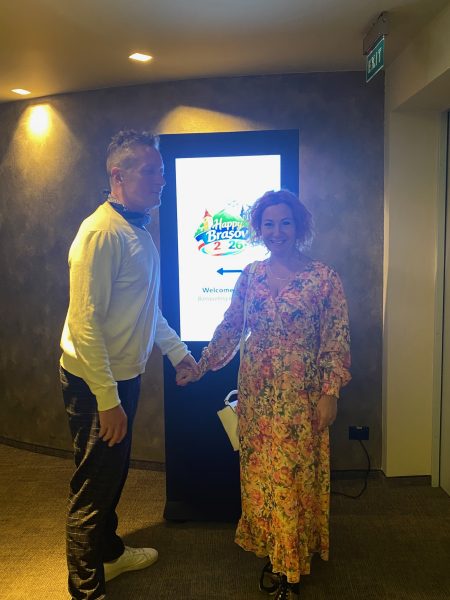
From September 20 to 24, 2026, I joined Happy Brașov 2026, an international gathering that brought together journalists, content creators, representatives of the meetings, incentives, conferences and exhibitions industry, and other tourism professionals.
The conversations revolved around a deceptively difficult question: How can a destination attract more visitors, professionalize its tourism sector and expand its international reach without sacrificing its independence or credibility?
It is a question familiar to almost every European destination that has watched tourism transform its streets, housing markets and public spaces. Venice has become an obvious symbol of the pressures that unchecked visitor numbers can create.
Around Brașov, however, there is still a sense of possibility. The region is not yet defined by the same degree of overtourism, and there is a palpable willingness to welcome travelers, develop infrastructure and build relationships with tourism businesses and institutions abroad.The challenge is to learn from destinations that have already experienced the consequences of excessive growth.
Tourism promotion, after all, is not simply a matter of persuading people to arrive. It is also a question of deciding what happens after they do.
During the event, tourism providers had opportunities to present their offerings, exchange ideas and establish contacts.
The discussions suggested that Brașov has considerable potential, provided that development is guided by a clear sense of regional identity rather than by visitor numbers alone.
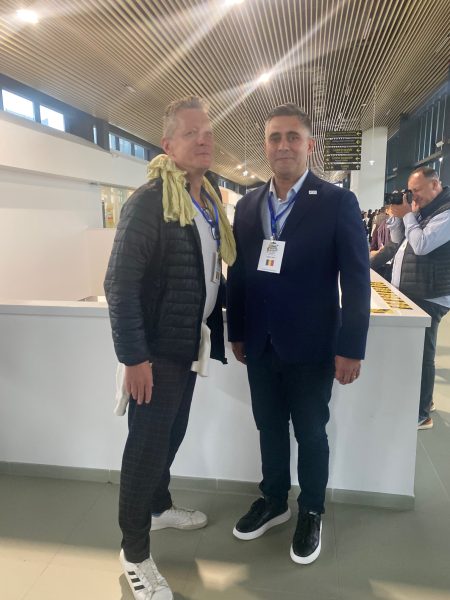
The Airport QuestionOne of the practical expressions of that ambition is Ghimbav Airport, near Brașov, which we visited during the gathering.Accessibility can change a destination’s prospects. A direct flight can turn a complicated journey into a weekend break, make business travel more attractive and encourage visitors to explore a region they might otherwise overlook.For my own arrival, however, I still flew into Bucharest’s Otopeni Airport. A direct connection that would have suited the trip was not available to me, and traveling onward by train seemed less convenient at the time. A week later, I made up for that missed rail journey, traveling from Constanța to Sighișoara for the Gastronomica food festival.That second journey became a reminder of something easily lost in the pursuit of faster connections: the pleasure of experiencing the distance between places.Romania rewards travelers who pay attention to the journey itself. The changing landscape, the transitions between regions and the simple fact of moving through a large and varied country all contribute to an understanding that cannot be acquired by visiting a handful of headline attractions.
A direct flight between Nuremberg and Brașov, if established, could make the region more accessible to travelers from Franconia and beyond. Nuremberg is already a partner city of Brașov, while Berlin has also expressed interest in closer ties.The historical relationship between Franconia and Transylvania offers a foundation for cooperation. Trade, migration, cultural exchange and shifting political circumstances have connected European communities across borders for centuries. Tourism could help renew those connections through cultural events, educational projects, institutional partnerships and cross-border travel itineraries.Yet an airport can only do so much.It can bring people together geographically. Whether that proximity leads to lasting cooperation depends on the people, organizations and ideas that follow. A successful city partnership requires more than convenient flights; it needs a genuine interest in one another.A Table in the CarpathiansAfter the discussions and presentations, Brașov offered an entirely different kind of argument for visiting.
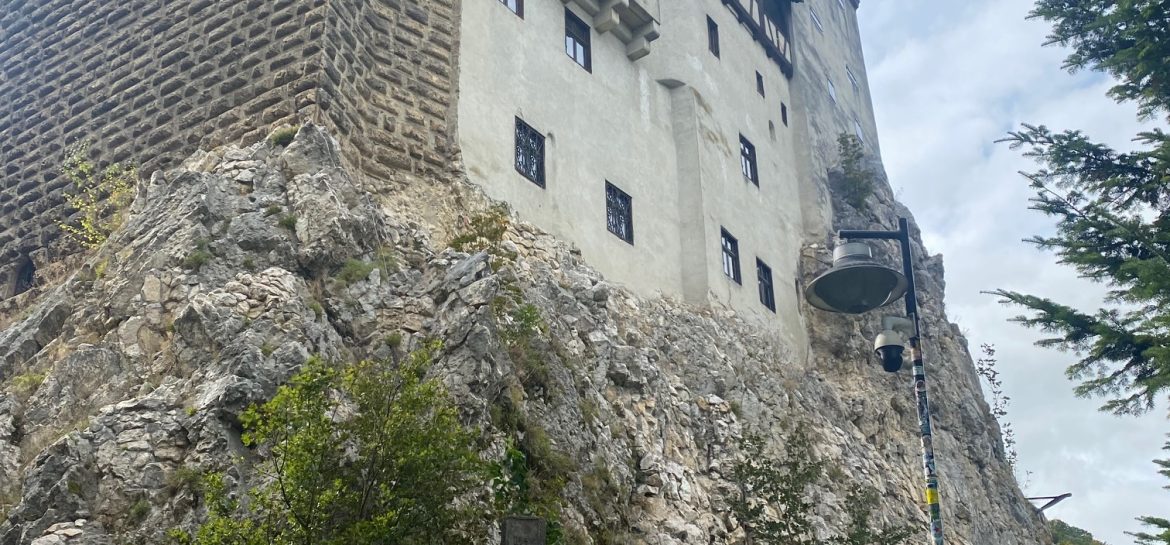
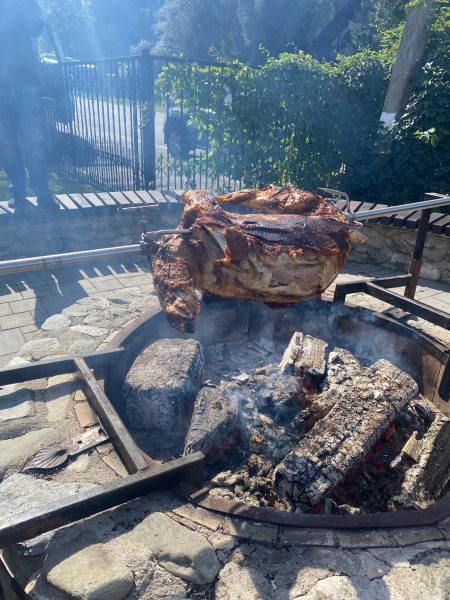
The pace slowed. The formalities receded. For a while, there was no need to consult a schedule or watch the clock.The old town was wonderfully atmospheric, but one of the most memorable moments of the trip came at Mama Cozonacilor, where we gathered for a barbecue.The lamb was superb.It had been grilled with a precision that allowed its natural character to emerge: a gently spiced aroma, a satisfying crispness on the outside and a balance of seasoning that never overwhelmed the meat. Each bite offered a little texture, a little warmth and the kind of flavor that makes conversation pause for a moment.It was a welcome reminder that a region’s culinary identity need not depend on elaborate presentation. Sometimes the most persuasive expression of local food is an excellent ingredient, treated with care and cooked over a fire.Across our lunches and dinners, Romanian culinary traditions appeared in different forms, often with an emphasis on ingredients produced close to where they were served. The result was a kind of radical locality—not a fashionable slogan, but a practical relationship between the kitchen and the surrounding countryside.Such meals reveal something that a destination brochure rarely can. They make the landscape tangible. The mountains are no longer simply a backdrop; they become part of the experience, reflected in what is grown, raised, prepared and shared.I left the table satisfied, certainly, but also with the impression that the region’s culinary appeal had barely begun to be explored.More Than a LegendTransylvania is often introduced to international visitors through a single character: Dracula.Bran Castle, closely associated with the Dracula legend in popular culture, remains an important part of the region’s tourism offer. It belongs on the itinerary. But to reduce Transylvania to a Gothic story is to miss much of what makes it interesting.The surrounding region offers mountain scenery, historic towns, opportunities for outdoor recreation and a substantial cultural inheritance. Visitors can take the cable car up Mount Tâmpa, explore attractions such as Dino Parc, discover the restaurants of Brașov or venture farther into the countryside.The panoramic views from the Panoramic Restaurant provide another way to appreciate the setting, while the region’s many smaller culinary experiences offer reasons to linger rather than simply pass through.Nature, relaxation and active holidays need not compete with cultural exploration.
They can complement one another, provided travelers and tourism planners understand what makes each place distinctive.There is also a more serious side to the landscape. The Carpathians are home to a significant population of brown bears, and the region’s wildlife is part of its natural heritage. Encounters with such an environment require respect and responsible management, not simply the promise of an exciting photograph.The challenge for Brașov is to communicate this variety without turning the region into a collection of disconnected attractions. A compelling destination emerges when its natural environment, history, food and contemporary life are understood as parts of the same story.The Future of the MountainsThat story becomes more complicated when the subject turns to winter tourism.Poiana Brașov is among Romania’s best-known ski destinations, and winter sports remain important to the region’s tourism economy. But, as in mountain regions across Europe, changing climatic conditions are making long-term planning more difficult.The future of skiing depends on a combination of factors: altitude, local weather patterns, snow reliability, water availability, energy costs and the environmental consequences of technical snowmaking. Their importance varies from one resort to another, and no single forecast can describe the future of every mountain destination.Still, the broader question is unavoidable. How can a region remain attractive when it can no longer assume that winter will reliably deliver the conditions on which its traditional tourism model depends?The answer cannot consist solely of extending the ski season.E-biking, hiking, nature experiences, cultural attractions and regional gastronomy could all help Brașov broaden its appeal beyond the winter months. But adding summer activities to a ski resort’s brochure is not the same as creating a sustainable year-round destination.That requires long-term planning, an assessment of environmental costs and cooperation among municipalities, businesses and regional stakeholders. It also means understanding which experiences can generate value throughout the year without placing excessive pressure on the natural resources that make the region attractive in the first place.The Carpathians face a question that has become increasingly familiar in the Alps: how can mountain tourism remain economically viable while protecting the landscapes on which its future depends?
For Brașov, this is not merely an environmental concern. It is a question of resilience. A destination with a broader range of experiences may be better placed to adapt to changing conditions than one whose fortunes depend too heavily on a single season.The region’s culinary traditions, historic towns and outdoor opportunities are not secondary attractions in this context. They are potential foundations for a more balanced tourism economy.The Pleasure of Taking the Longer WayMy journey eventually led me beyond Brașov. Traveling from Constanța to Sighișoara by train for the Gastronomica food festival gave me another opportunity to experience Romania as a country of distances and transitions.There is a particular pleasure in watching a landscape unfold rather than treating it as something to be crossed as quickly as possible. A train journey makes room for observation. It allows the traveler to sense the scale of a country and to recognize that its regions cannot be reduced to a single image.Perhaps that is why Romania left such a strong impression on me. It is a destination that invites curiosity without immediately exhausting it. There are famous sights, of course, but there are also meals that linger in the memory, conversations about the future and places that seem to reveal more the longer one stays.
Happy Brașov 2026 offered a useful perspective on the ambitions of a region seeking to develop its tourism industry without losing sight of its character. The discussions about international cooperation, transport infrastructure and sustainable development were important. So, too, were the less formal moments: the old town in the afternoon, the mountain air, the grilled lamb and the experience of traveling across the country.The most convincing destination stories are rarely about one attraction alone. They emerge from the relationship between place and people, between what a region has inherited and what it hopes to become.Brașov has the historical substance, natural setting and culinary culture to tell such a story. Its next chapter will depend on how thoughtfully it develops them.
As for me, I arrived in Romania expecting to see Transylvania.I left having fallen in love with the country.
The editor’s recommendation: The Carpathians are more than a destination. Go and discover them for yourself.Editorial note: This press trip was supported by Happy Brașov. The support did not influence the content or editorial independence of this report.