Contributed by feature reporter Jens Hoffmann
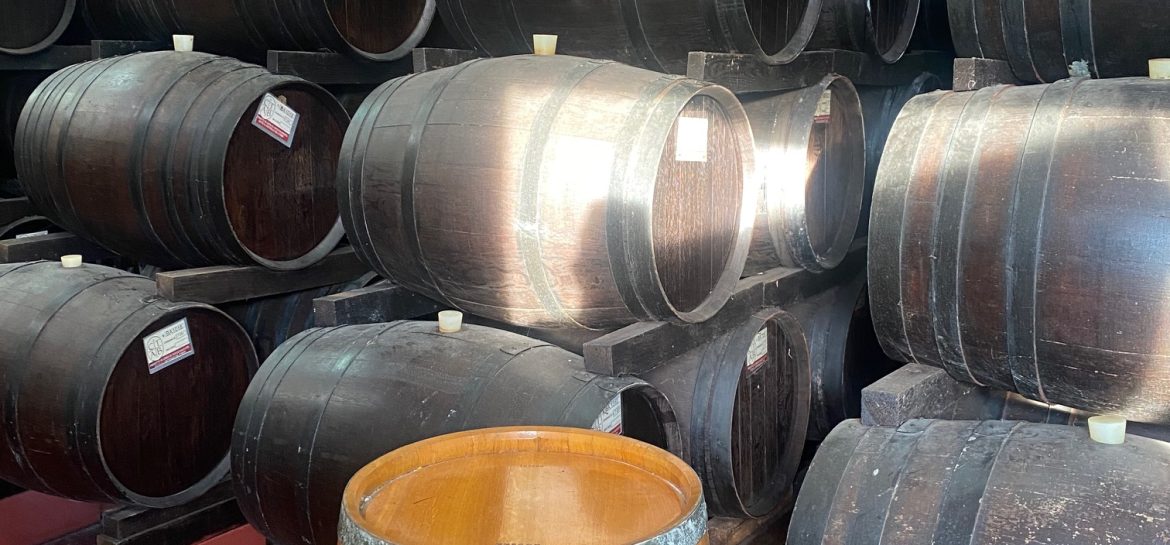
There are rows of wooden barrels, some small enough to lift with both hands, others large and heavy with age. Inside them, grape must has been quietly changing for years — sometimes for decades.
Lets say in Modena time moves differently.
The room smells of wood, fruit and something deeper: a dense, almost mysterious sweetness.

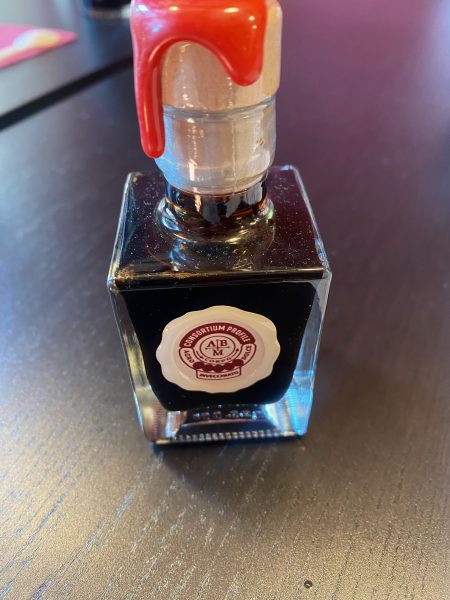
A drop of balsamic vinegar falls from a spoon.
Like a love poem.
On the tongue, sweetness arrives first, followed by acidity, then a long, warm complexity that seems to belong as much to the wood and the air as to the grapes from which it began.
It is easy, tasting it now, to imagine that balsamic vinegar has always been what it is today: one of Italy’s most recognizable luxuries
Similiar to a Ferrari.

Everything feels very good.
But its story is older, stranger and less certain.
Its origins disappear into the kitchens of antiquity, where grape must was reduced over fire and transformed into concentrated sauces.
Long before the name Aceto Balsamico existed, the Romans called it different depending on the degree to which the must had been reduced.
The poet Publius Vergilius Maro described the practice as pure agriculture and rural life.
In the territory around what would become Modena, concentrating grape must was already an established culinary tradition.
The Romans used these preparations in ways that would not seem entirely unfamiliar today. Defrutum could be added to wine to make it sweeter. It was also used in cooking, particularly with meat, sometimes on its own and sometimes alongside herbs and spices. Its particular attraction was the tension between sweetness and acidity — a combination capable of turning a simple dish into something more layered.
The essential idea was already there.
Grapes. Fire. Wood. Time.
What changed over the centuries was not so much the principle as the culture that grew around it.
In 1046, Henry III of Franconia was traveling to Rome to mmet Pope Clement II.
On his journey he stopped in Piacenza and heard of a remarkable vinegar produced in the surrounding region.
He wanted to taste it.
So he sent a messenger to Boniface of Canossa, the powerful lord of Reggio Emilia asking for some of the celebrated vinegar.
He sent the emperor a flask filled with the precious liquid.
The scene has become part of the mythology surrounding balsamic vinegar.
Historians cannot establish that the vinegar Henry received was identical to the traditional balsamic vinegar produced today.
The documentary evidence is too thin, and culinary traditions rarely follow the neat chronology of official histories.
Yet the story is live in Modena.
A thousand years ago, a special vinegar from Modena was already considered sufficiently remarkable to be requested by an emperor.
That is perhaps the first great clue to the strange status balsamic vinegar would eventually acquire: it was never merely vinegar.
By the 16th century, the vinegar traditions of Modena began to grow behind secret doors.
The sweet-and-sour preparations produced in the vinegar cellars scattered through the Modenese countryside — were increasingly valued for their distinctive flavor.
What had long been part of domestic culinary practice began to acquire the aura of refinement.
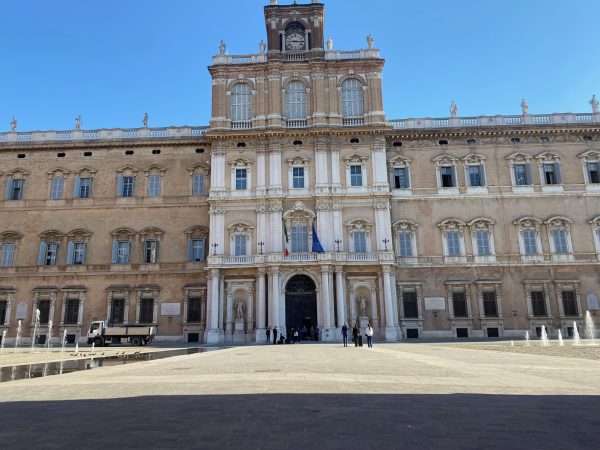
The powerful Este family ruled Modena from the late 16th century, bringing with them the elaborate rituals and tastes of an Italian court.
They embraced the local tradition of making and aging vinegar, transforming something that had been produced in households into something worthy of aristocratic attention.
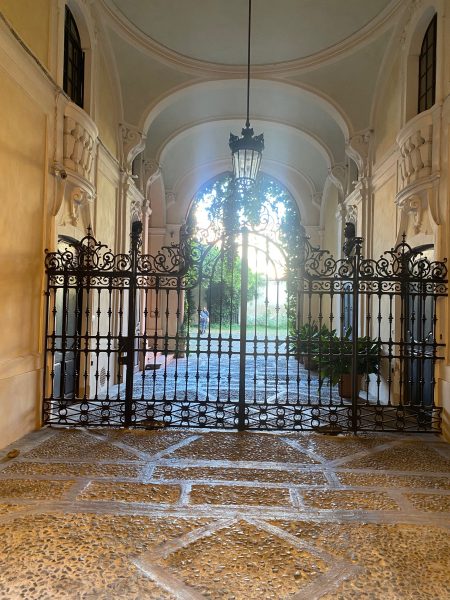
At the ducal palace, an acetaia was established with 36 barrels in the Camera del Prato, one of the rooms in a tower of the palace.
The image is difficult to resist: beneath the grandeur of court life, barrels quietly aging in a dark room.
While dukes negotiated alliances, commissioned paintings and received ambassadors, the vinegar waited.
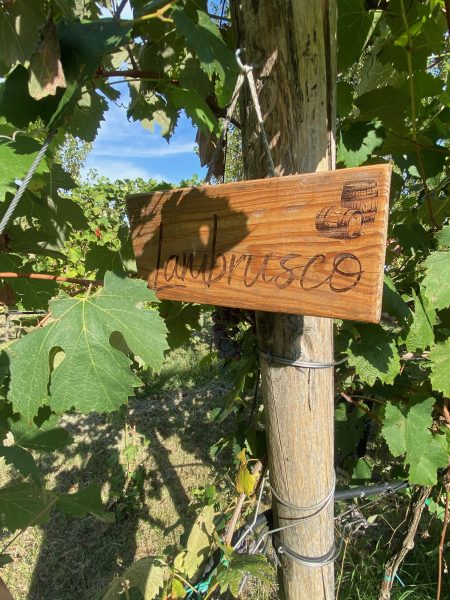
Unlike wine, which is often celebrated for the vineyard and the vintage, traditional balsamic vinegar is fundamentally a product of transformation.
Fresh grape must is cooked down and concentrated. It is then placed into wooden casks and gradually transferred through a succession of barrels and each contributing something to the final character.
The process rewards patience but punishes impatience.
A young vinegar can be sharp.
An old one becomes rounder, denser, more harmonious. The sweetness and acidity cease to compete and begin to balance one another.
For centuries, however, balsamic vinegar was valued for more than its flavor.
The word Balsamico itself points toward an older belief in the vinegar’s restorative qualities.
A balsam was for healing, and balsamic vinegar was a substance with medicinal powers.
Stories from the courts of Renaissance Italy reinforce this reputation, together with the beautiness of Modena.
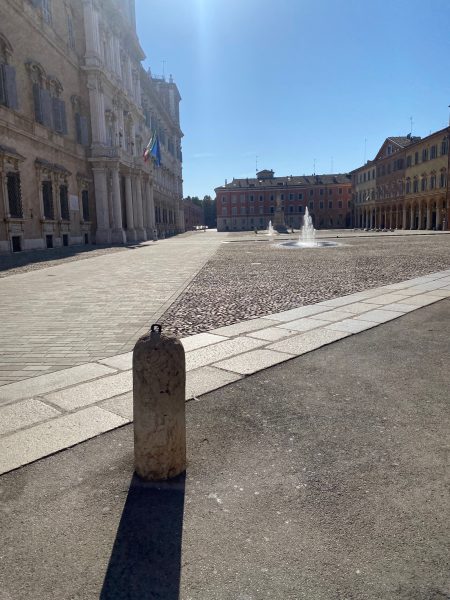
In former times balsamic vinegar was used for its therapeutic properties during the birth of her son Ercole II in Ferrara.
By modern standards, these practices belong to the history of medicine rather than medicine itself.
But they tell us something important about vinegar in the imagination of earlier generations.
It was powerful because it gave joy like a sweet sirup.

It helped to believe in love, joy and food.